- The Resilience Brief
- Posts
- Real-life resilience - Monty Python
Real-life resilience - Monty Python
Rockstars to the rescue with some out of the box thinking.

Carre Le Page
September 14, 2025
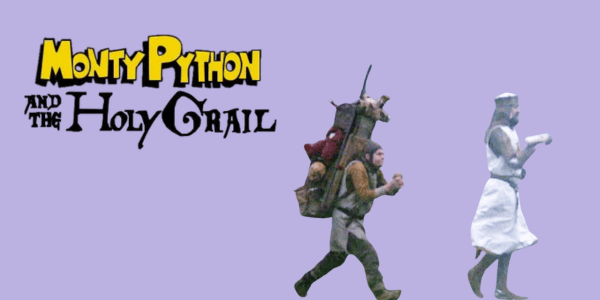
No budget. No problem.
This is the story of one of the most beloved comedy films of all time.
If you’ve ever seen Monty Python and the Holy Grail, you’ll know it for its absurd humour. Clunking coconuts for horses, the Black Knight losing his limbs, and a killer bunny rabbit.
Most people, however, don’t know that the film is a complete underdog story. It’s a tale of innovative creative persistence that, had it gone just a little differently, might have meant that the movie was never made at all.
And that’s what makes it such a fun and interesting real-life resilience story of pop culture.
Here’s what happened.
In the early 1970s, the Monty Python crew (six British comedians with a cult following from their TV show) had the idea of a film set in medieval times, where knights galloped around on horses in search of the Holy Grail.
They pitched it over and over, but everyone rejected it.
No one, including the BBC, wanted to fund what appeared to be an incoherent, low-budget idea that felt like a fever dream. It wasn’t a straight-line narrative, but rather a string of ridiculous sketches held together by the search for the Grail. The plot was flimsy and hardly screamed box-office success.
But the group believed in it. And instead of giving up, they did some out of the box thinking.
They got help…. from Led Zeppelin.
Along with Pink Floyd, Genesis, and a few others, these rock legends poured their own money into the project (Zeppelin put in about $40k USD at the time). Partly because they liked the team at Monty Python, and partly for tax reasons. But mostly because they understood what it meant to make art.
Even with those financial injections, the budget for the film was still razor thin, which forced the team to improvise on set. The horses were replaced with coconuts clunking together, the castles were reused multiple times from various angles to represent different castles, and there was almost no budget to even pay the actors, so they all just played multiple roles.
The Pythons turned every constraint into comedy gold. They used the difficulty in whatever way they could, so as to turn those “limitations” into the film’s most iconic features.
The film went on to become one of the most beloved comedies of all time. All because a small group of weirdos believed in what they were doing, refused to take no for an answer, and found the most hilarious ways to navigate the constraints.
Yes yes…but what does this have to do with work?
I love this story because it’s a clear example of resilience from many different angles.
And, just like these guys trying to find a way forward, we’re probably navigating a project, challenge, task that might include a few significant roadblocks. The test is how we find a way through.
Here’s what Monty Python can teach us about resilience at work, and how to actually apply it.
Unconventional allies. It’s who you know. This is the oldest truth in business for a reason. It’s also one of the most perfect demonstration of the importance of community when building resilience. If we can expand our inner circle, we open up whole new worlds of opportunity. The Pythons found support from rockstars. For us at work, our allies might not be in our department. They might be in finance, or HR, or halfway across the org chart. We can’t dismiss people who don’t run parallel to us. In fact, we should seek out fresh perspectives, new ideas, curious minds from other departments. Personally, this all starts with a genuine curiosity about others. Ask questions, show real interest and care, and try to see the world through another person’s lens.
A beautiful constraint. We lament the limited budget, but a quick reframe offers a whole new perspective. What if we looked at it as a moment to be our most imaginative, test a bold new course of action and potentially knock it out of the park? The coconuts became iconic, but they may never have happened if the studios had originally said yes and poured money into the film. Our limitations are often our advantages in disguise.
Creative persistence. Build “rejection tolerance” when people don’t seem to have the same passion as us. Monty Python’s ideas weren’t for everyone, but they were able to move past the studios with a reroute. In our world, that might mean some wild ideas - pitching a new process, launching a team initiative, or suggesting a bold campaign. We’re stronger when we expect the pushback. Plus, that’s the way we build the muscle to hear “no” without stopping. This starts with embracing discomfort.
Own our weirdness. The interesting stuff is often on the outer fringe. The team at Monty Python leaned hard into exactly what made them them. But how often do we shave our best edges to seem safer? The problem is that, when we do that, we risk becoming invisible. Instead, when we have a viewpoint, or a mantra that we choose to live by, well that is what makes us seen. It worked for Avis with their “We try harder” messaging, and it can work for us. Sometimes when we purposely choose not to play it safe, the good stuff appears right outside our comfort zone.
We might imagine resilience as being just like the iconic hero in an action film (think Russell Crowe in Gladiator). However, often in reality, it’s more like a Monty Python skit with clip-clopping coconuts, stumbling through makeshift scenes, and turning every setback into the punchline.
Resilience is hard, but it can also be a lot of fun if we embrace some fresh perspectives, foster those relationships, and own our uniqueness. Because there’s always a way forward when we look for it.
Until next time friends, rock on!
Carré @ Resilient Minds
PS - for Australian readers, I’ll be in Brisbane and Melbourne this November running a series of workshops. I still have a few timeslots available, so if anyone is looking for an in-person team workshop, just reply to this email and we can chat.
What did you think of today's newsletter? |
Reply