- The Resilience Brief
- Posts
- The thing about confidence
The thing about confidence
It's not confidence if we need applause.

Carre Le Page
December 24, 2025
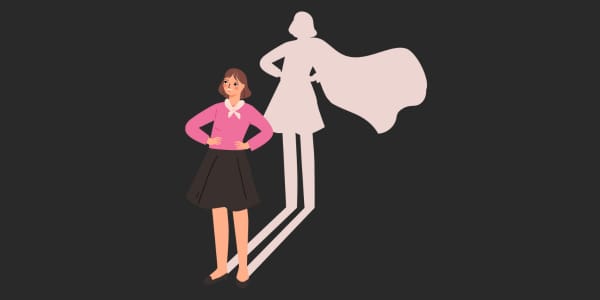
I don’t know what happens when we die, but I once read a definition of hell that still nibbles at me years later.
Hell is the moment you meet the person you could have become.
I just had a birthday, with a fresh “+1” added to the sum total so far. Whenever birthdays come around, I usually ask myself what I did with the last trip around the sun. It’s a time of self-reflection.
And even though I’ve had a big and exciting year, I haven’t always done enough with the time I’ve been given.
And it’s not because I’m lazy. It has more to do with confidence. Sadly, like many people I speak with, confidence has been a leak in my bucket at times. Sometimes it’s overflowing and I feel unstoppable. I’m alert, in the right place at the right time and momentum is on my side.
But other times, something shifts. Sleep gets chopped up and stress starts to stack. That’s when my nervous system gets crunchy and confidence seems to have left the building.
If only confidence was a switch we could flip, like turning on the kettle. But it’s not a switch.
It’s a relationship. And we need to nurture it.
The trap: outsourced confidence
Outsourced confidence is when our sense of worth and capability depends on other people’s reactions (and this includes the little blue thumbs we crave online!). That means the approval, praise, comfort, or simply the absence of disapproval.
It’s a trap because it makes confidence temporary and fragile: the moment feedback gets cold, ambiguous, or critical, our nervous system spikes and we start shrinking, overthinking, and performing. The cost is huge because we’re chasing safety externally instead of building self-trust internally.
Outsourced confidence feels like this:
We replay conversations over and over in our head
We soften our truth to avoid friction
We hesitate before speaking up
We self-monitor constantly
From the outside, we’re doing well. But from the inside, we’re bracing.
And if our nervous system is always scanning for approval or social danger, it’s completely exhausting.
The mechanics of confidence
We often think confidence is an attitude, but it’s also a prediction our brain makes.
Our brains are constantly asking whether something is safe, whether we can handle it, or predicting what will happen if we mess something up.
And when the brain senses risk (especially social risk like rejection, embarrassment, disapproval) our nervous system can shift into threat mode.
And when we’re in threat mode, the amygdala gets louder and our body prepares for protection. We suddenly find ourselves in the fight/flight/freeze mode, or (more relevant) fawning…. which is when we’re constantly trying to please everyone. Suddenly our prefrontal cortex (responsible for decision-making, clarity, perspective) becomes less engaged.
As a result we feel less confident, and we literally have less access to the part of us that acts confident.
This is why confidence often improves when we’re rested, supported, and regulated… and collapses when we’re depleted. It’s biology.
So, when it comes to confidence, these are the definitions that really matter:
Confidence is self-approval that survives disapproval.
Confidence is self-trust under pressure.
Basically these mean that, even if it’s messy… we back ourselves.
4 tools to build real confidence
A confidence cookie jar. If confidence is outsourced, the brain is basically waiting for confirmation from others. So we reverse it by giving our brain evidence up front. Start a note on the phone called “Confidence cookie jar” and add the good stuff once a week. That includes things we handled this week. Perhaps it’s one hard moment we didn’t avoid, one moment we told the truth, and one example of progress (not perfection). Over time the list grows and, when we have a hard conversation or meeting, we use this list. Our threat brain forgets our competence under stress. This list will remind it.
Micro-exposure reps. Confidence is trained over several reps. We can’t just declare we’re confident and hope for the best. We build it like a muscle. The way to do it is to pick one tiny edge each day and push ourselves. It’s like a vaccine where a little exposure helps our body prepare. This prep could include challenges like: asking one direct question, or disagreeing politely on purpose, or even posting one imperfect idea. These small exposures teach our nervous system that we can get through this.
A 90-second reset. This helps our body get back onto our side. Any moment that requires confidence usually comes with a visceral feeling in our body. Tight chest, shallow breath, fast heart. Try any mindful breathing exercise (such as the physiological sigh) to help change our body first. We’re turning down the threat response to notice that the sensations we’re feeling are simply activation, not proof that something is unsafe. If we label it as “arousal” (energy) instead of “danger,” our nervous system stops overprotecting us and we get access to clearer thinking and steadier words.
One degree truer. I love this one. We stop performing and start aligning to what matters most. A lot of people think confidence means being bolder, but I think it actually means being truer. Truer to ourselves and what matters most. This requires pushing ourselves to practice our values, even when it feels uncomfortable. It builds a deep kind of confidence which is integrity-based and we choose not to abandon who we are.
The goal with all of the above strengthen our foundation. We want to be solid in the way we move forward, with integrity and trust in ourselves. Because that’s all confidence really is: to know that, whatever comes our way, we believe in ourselves enough to get through it.
And, when we do that, we’ll never be afraid of meeting the person we could have become, because we’re becoming the person we’re meant to be.
Until next time friends, stay resilient. And wishing you all a very Merry Christmas!
Carré @ Resilient Minds
PS - don’t forget about the free 21-day Resilience Kickstart to begin 2026 with a system to navigate stress, anxiety and chaos ahead. And send it along to a friend or colleague who has big plans for the year ahead!
What did you think of today's newsletter? |
Reply