- The Resilience Brief
- Posts
- Real-life resilience - Domino's Pizza
Real-life resilience - Domino's Pizza
Eat that feedback up.

Carre Le Page
March 01, 2026
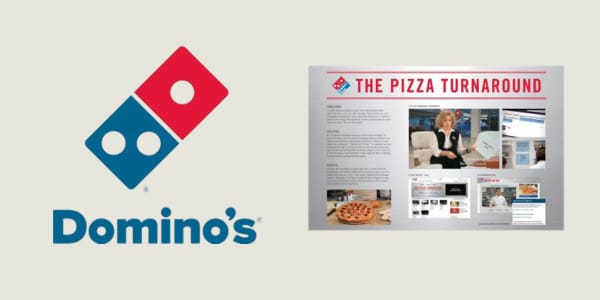
In 2009, a consumer taste survey ranked Domino's Pizza last in the fast-food industry. At the same time, the Domino’s stock price had fallen to under $3 a share and customers online were slamming their crust for tasting “like cardboard” and the sauce “like ketchup”. It was a public beatdown.
Most companies in that position would have perhaps tried tweaking the recipes a little, issued weak apologies, and hoped everyone moved on. But that’s not what happened to Domino’s. The CEO, Patrick Doyle, did something almost no one in corporate America had ever done before: he leaned into the humiliation. He put the most brutal, embarrassing and damaging customer feedback front and centre in a national ad campaign. Yes, he invested advertising dollars on ads that showcased customer dissatisfaction in the brand. But he did it while also publicly acknowledging that Domino’s clearly had to make significant changes.
What followed was one of the most remarkable business turnarounds of the last 25 years.
Domino's then got to work on fixing everything. The chefs spent 18 months testing ten new crust types, different sauces, and dozens of seasoning blends before arriving at a recipe they were confident in. The cheese was upgraded to 100% mozzarella with a hint of provolone, and they created a new sauce recipe. Then they tested the new pizza with blind taste tests across 1500+ consumers in the USA, which beat their major competitors. Their ad campaign also included Domino's staff tracking down the harshest critics (people who’d written scathing online reviews) and delivering them the new pizza to ask for a second chance.
It worked! Sales quickly jumped by more than 14% and the share price rebounded nicely. It might have bottomed out at just under $3, but today that same share trades at over $400!
The turnaround is spicy in all the right ways! But what impresses me most is that Domino’s chose not to shy away from the feedback, instead using it to their advantage. It’s a powerful play in business, life, and our careers if we see feedback as a smart way to grow and improve. In fact, the critics were actually Domino’s best asset because they told leadership what the problems were, so that those issues could be fixed. Thankfully, the pizza giant embraced the feedback.
The problem with playing defence.
We live in a world that seems to reinforce a need to always be right. When someone criticizes our work or opinion, every instinct converges to encourage us to explain, justify, deflect etc. Whether it’s online, in meetings, or in relationships we have this internal structure aimed at protecting our position. And it makes sense, because criticism stings and the ego is fragile.
But that defensiveness is costing us. It keeps us exactly where we are. Every unit of energy that goes into defending our current position is energy that isn't going into improving it. It’s like we’re running to stand still.
It was this radical honesty that saved Domino's much more than a clever marketing campaign. That honest look at themselves sparked a total makeover fueled by an acknowledgement of weakness. It was perhaps the most coachable moment in the company’s history, demonstrating the power available when we embrace feedback as just information on how to succeed.
Slices of advice.
Radical honesty is a practice. Here are five ways to build it into our daily lives.
Separate the sting from the signal. When feedback lands, our nervous system reacts before our brain does. That initial flash of defensiveness or shame is physiological, not intellectual which is just our threat response doing its job. The practice is to find a gap or moment of pause: feel the sting, but then take a breath to look for the signal. There was never a moment that Domino’s CEO enjoyed getting blasted for a crappy product, but he had enough EQ to accept it as feedback. The sting fades, but the signal remains.
Seek out harsh critics. One of the boldest moves for Domino's was to seek out the people who were disappointed the most. They went straight to their fiercest detractors and offered them an invitation to try the new pizza. It feels totally counterintuitive, but the most useful feedback rarely comes from people who always say “that was good.” Let’s ask the colleague who pushed back hardest on our last idea, or the client who left for a competitor. The people who care enough to be disappointed are the ones worth listening to.
Make the feedback visible, not private. Domino's put the bad reviews everywhere. There is something psychologically powerful about externalizing criticism rather than holding it. If we keep negative feedback hidden, it tends to grow. When we name it out loud (in a team meeting, in a journal, in a conversation with a mentor) it loses its power to paralyze us and becomes something we can actually work with. The act of saying it out loud changes our relationship to it.
Criticism is not a verdict. Domino's used the negative feedback as the beginning of their story, and they chose to finish it on their terms. Every harsh comment was a constraint to design around. In our own work, when someone tells us something isn't good enough, let’s try reframing the criticism as a challenge to find what excellence might look like. This shifts the energy from shame to problem-solving almost immediately, and it's the difference between feedback that crushes us and feedback that builds us.
Responses beat apologies. Domino’s acted swiftly and substantially. In a world saturated with corporate sorry-not-sorry statements and endless blame games, what actually stands out is changed behaviour. In our own life, when we've received feedback that turned out to be right, let’s resist the temptation to over-explain or over-apologize and just get to work on what we’ll do differently. Actions always speak louder than words.
All feedback is fuel. It's not always comfortable fuel but, if we're willing to receive it, it’ll take us further than we might imagine.
We don’t need to fear our harshest critics this week. Instead, it could be an opportunity to buy them a pizza.
Until next time friends, stay resilient.
Carré at Resilient Minds
PS - speaking of feedback, please take a second to rate this newsletter below or hit reply and send me any thoughts. I read all comments and, just like Domino’s, I use them to move me forward. Thank you.
What did you think of today's newsletter? |
Reply