- The Resilience Brief
- Posts
- Burnout thrives in silence
Burnout thrives in silence
The NASA lesson every leader needs to hear.

Carre Le Page
February 18, 2026
In January 2003, a man named Rodney Rocha was bothered by something. He was a structural engineer at NASA’s Space Center and he was mulling over a serious concern. A week earlier, the space shuttle Columbia had lifted off from earth. But during the launch, a chunk of foam used for insulation (about the size of a briefcase) had broken off from the external fuel tank and hit the shuttle's left wing. It had apparently hit the wing at over 500 miles per hour.
Rocha reviewed the footage over and over. He would later admit that something in his gut felt very “off” about this. Despite that the shuttle didn’t appear damaged by the impact, it still felt serious. He started emailing, requesting satellite imagery to assess the damage. He asked his colleagues, whipped up memos, and flagged his concern. He even suggested NASA consider outside assistance to weigh in.
His requests were repeatedly denied. One manager even told the team not to be concerned. Pieces of foam had come off on previous missions and everything had been fine before. So it would be fine now.
Rocha backed down.
Seventeen days later, the Columbia shuttle broke apart during re-entry into the Earth's atmosphere. All seven crew members died. The damaged wing (the one Rocha had been trying to get a closer look at) couldn’t withstand the heat.
Years later, Rocha said his deepest regret was not breaking the door down. He was sure that the brightest minds at NASA would have had ideas on what to do. But instead, his concerns went unanswered and were eventually dropped as they travelled up through the chain of command.
An investigation later concluded that the NASA organizational culture had as much to do with this accident as the foam. Read that again.
“She’ll be right” doesn’t always work.
In Australia, there’s a saying “she’ll be right, mate” which basically means that everything will work out ok. I’m a fan of this mindset, but not all the time. There are moments for putting our trust in the fate in the world, and there are moments we need to sit up and pay attention.
The foam impact on the shuttle’s wing was one of those moments to sit up.
The fact that NASA missed this incident seems absurd considering just how miniscule the margin for error is in these things. I can’t think of another word to describe it other than ‘neglect’. It stems from the very human habit of normalizing what we've survived before. The foam came off. Shuttle landed. Foam came off again. Shuttle landed again. Over time, the warning signs stop feeling like warning signs and just became the norm.
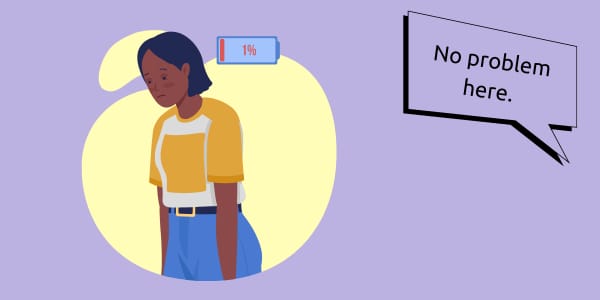
Sadly, particularly these days, this is a metaphor for what’s happening in many businesses as the burnout rates reach all time highs.
We tend to absorb the unsustainable workload and tell ourselves it'll ease off after this quarter. We notice team morale dipping but assume it'll bounce back. We feel the chronic stress accumulating but reframe it as being dedicated. We find a way to cope.
Real resilience is much more aligned to a mindset of adaptability and finding a productive way forward, especially when the environment around us makes it safe to do so.
Here's what I believe that looks like in practice.
Naming the thing out loud. Even if the culture tells us not to, most solutions start with awareness. Rocha knew something was up and sent the emails. Sadly, it wasn’t enough and he later said his biggest regret was not “breaking the door down”. For most professionals, the barrier to naming what's wrong is simply permission. We tend to wait until we're certain and we have proof. But the most resilient of us will say the uncomfortable thing early, precisely because it's early. That's leadership.
Focus on what’s in our control. The foam hit was done. It couldn’t be undone. But what could be done was to push for better information. That's the move we need to make: not to spiral on what's already happened but focus hard on the next best action available. A simple but powerful tool is to write two columns before a difficult week… what we can influence, and what we can’t. Then we protect our energy for the first column and make peace with the second.
“We've always been fine" isn’t a strategy. There’s a formal name for what happened at NASA. It’s called “normalization of deviance”. It's what happens when we get used to risky situations because they haven't caused disaster yet. In organizations, it shows up as the process nobody questions, the overloaded person who never speaks up, or the culture where burnout is treated as a rite of passage. If the only evidence that something is safe is "we survived it last time," that's not a strategy. Resilient teams audit their own norms regularly and ask if something is actually working, or have we just stopped noticing?
Find our people. One of the most apparent failures at NASA was that the structure and culture had evolved to muffle the very voices it needed most. Information was filtered and softened as it moved up the chain. This seems to happen in organizations everywhere. Real resilience requires building relationships that cut across hierarchy with leaders and peers who will tell the truth, and who we can reach without going through five layers of process.
Systems AND self. There’s always something that individuals can do to reduce burnout, but giving someone a breathing exercise doesn’t solve everything when we also need to redesign a broken process. If the problem is structural, the solution has to be structural too. After Columbia, NASA overhauled its entire safety communication culture. If our teams keep burning out, the answer might not be more self-care. It might be clearer priorities, or a manager who actually asks how people are doing.
Even when life hits us with storms of stress and commotion, the goal is never to endure the chaos indefinitely. We need to find appropriate ways to evolve and adjust accordingly so we can collectively build something strong enough to fly again.
Until next time, stay resilient friends.
Carré at Resilient Minds
PS - I love helping organizations develop ways through burnout via resilience and renewal. Pass this along to a leader who might be open to the idea that when we treat recovery as a skill (rather than a reward) everyone wins.
What did you think of today's newsletter? |
Reply