- The Resilience Brief
- Posts
- Finding space between work and home
Finding space between work and home
From CEO to dad: a simple tool to switch off after a big day

Carre Le Page
January 07, 2026
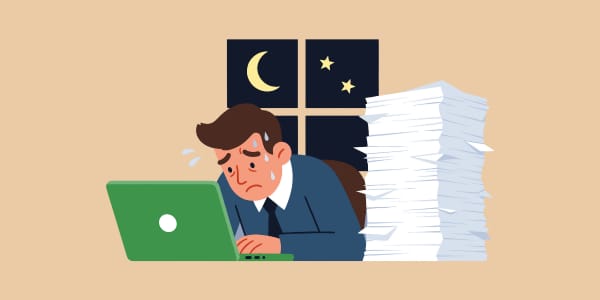
From CEO to dad
A mate of mine runs many successful businesses that require him to be constantly on. Clients, staff, problems to solve, opportunities to chase. Proper CEO stuff.
On top of that, he’s an awesome dad and present with his kids.
When I caught up with him recently, I had to ask how he was able to do it all. How does one manage to detach from a ridiculously busy schedule to be present for the family?
He told me about the concept of the “Third Space” that he’d read from a Dr Adam Fraser.
The core idea of the Third Space is that life is broken into three spaces:
First Space: What we’re doing right now (eg: work or a meeting)
Second Space: What we’re about to do next (eg: go home to family, move onto another task)
Third Space: The transition moment between them
The Third Space is where we decide whether stress gets carried forward, or consciously left behind.
Every day when my friend gets home, he does the same small ritual: puts his keys and bag down, a quick wave to whoever is home, and then he goes upstairs and changes from whatever clothes he was wearing that day, and he puts on a t-shirt. He comes down and greets everyone, straight into “dad mode”.
The idea is simple: work version off, home version on.
I’m not kidding when he told me that changing into a t-shirt saved his marriage. I thought it was an exaggeration, but he was dead serious. Prior to this idea of a third space, he’d come home and bring his work problems with him. He’d be distracted, crabby and irritable. It was costing him way too much with his family, but he found something physical to mark the real switch.
Thankfully, it was enough to be able to find the space he needed.
Back at it again.
Here we are in the first week of the new year and people are already feeling it. Conversations in my inbox and on LinkedIn suggest we’re straight back into the full swing of work and life, and that comes with a familiar sense that the boundary between work and home is at risk of fading again.
We need to talk about how to protect that line before it disappears altogether.
We all work hard, so I know we’re not struggling with laziness. Instead, I think most of us might be struggling with carryover.
We do give it our all and we should be proud of that. But the tricky part is that, when the day is done, our body comes home, but our brain is still stuck somewhere else.
Microsoft has actually conducted some detailed research based on anonymized data from millions of Microsoft users globally. The work habits are startling (and sad), referring to modern work as an “infinite workday.” They found things like:
Meetings starting after 8pm are up 16% (year on year)
Chats sent outside 9-5 are up 15% year on year, with an average of 58 messages per user arriving before or after hours
30% of meetings span multiple time zones
Let’s face it… even if we want to switch off, the workday now has a habit of stretching… on and on and on.
And we all know the cost. Stress, burnout, anxiety, emotional exhaustion go up.
Now, to be clear: I’m not here to suggest that we “care less” or “lower our standards.” I’m talking about our ability to set some boundaries, continue to work hard, but focus on recovery as a strategy, rather than a reward.
Boundaries and recovery are the fuel that makes us resilient. To stop dragging work into moments with people we love, try these tools.
Create a transition trigger. Pick one small physical action that marks the end of work. Changing clothes is a good one, but it could also be a walk around the block. My mum used to sit in her car after a long day at the hospital and just take 10 deep breaths. She called it “mindful shedding”. We can do that, or anything else that works. It doesn’t need to be dramatic. It just needs to be consistent because our brain learns through repetition.
A 3-minute mental handoff. Before we shut the laptop, take just a few minutes to prep mentally for the next day. Write down the three most important things for tomorrow, one thing we’re worried we’ll forget and one thing we completed today (so the brain doesn’t keep searching for proof we did enough). Then close the laptop. We’ve parked the work instead of carrying it into dinner.
A fence around our phone. It’s a powerful exercise to remove the phone from the equation, but if we can’t keep it out of eyesight, we can at least turn off notifications and/or email. This is about respecting the sanctity of a life without the need to be connected every second of every day. So switch off emails after 6pm…I dare you!
A “first 10 minutes” rule. When we walk in the door, set up an internal challenge where we’re not allowed to discuss work. Instead, push to ask questions that go in a different direction like: “What was the best part of your day?” or “What can I support you with tonight?” This is less about conversation and more about presence. We’re teaching our attention where to go.
Those around us want us to be here. Real presence is a potent (and attractive) characteristic in today’s attention-deficit world. Don’t we all feel more connected when someone is really present and in the zone?
So borrow my buddy’s t-shirt rule! It worked for him so it can work for us all. We just need to mark the moment, close the loop, and arrive home with purpose.
Until next time friends, stay resilient.
Carré @ Resilient Minds
PS - it’s not too late to join the Resilience Kickstart for 2026. A reminder that it’s free and you’ll slot right into whatever day we’re on. You can check it out here.
PPS - Here’s a link if you want to dive into the Microsoft Work Trend Index.
What did you think of today's newsletter? |
Reply