- The Resilience Brief
- Posts
- Dress for the weather
Dress for the weather
Ever worked with a human tornado? Here’s the resilience skill that matters most.

Carre Le Page
March 25, 2026
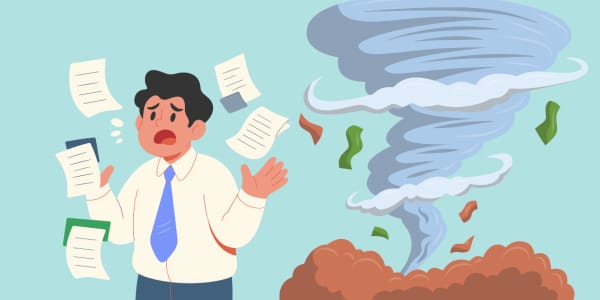
I once worked for a CEO who had a habit that was humorous, disruptive, and mildly terrifying.
This was before working from home was a thing. We’d be deep in conversation at the office in a meeting room, halfway through a serious update or budget discussion. Without warning, the door would swing open and the CEO would appear.
He’d lean in, scan the room and casually ask: “What the f— is going on in here?”
After a bit of confusion, one of us would let him know exactly what the F was going on. Usually he’d nod with mild interest, close the door, and wander off.
It was like a human weather event. A sudden gust of confusion blowing through the room, leaving us all sitting there a little stunned, wondering whether we were in trouble.
I don’t think he was trying to micromanage. I think it was just his way of letting people know he was around and interested. As I grew in the ranks of that business, he’d even occasionally sit down and join the meeting if it was something appealing to him.
If I was to describe him as a weather system, it’d be ‘a sudden mild change’. But other leaders might be better described as a ‘tornado’ or ‘tidal wave’, arriving with so much brute force and chaos that they leave a trail of damage in their wake. I’m sure we all know at least one colleague or acquaintance like that.
The trouble is, I’ve never once seen anyone control a tornado.
And it serves us well to remember that.
Controlling the weather.
Every day at work, it’s almost a guarantee that targets move, inboxes explode, and priorities pile up. If we add one volatile leader, reactive colleague, or emotionally unpredictable client into the mix, suddenly it can feel like we’re trying to do focused work while watching the first 20 mins of Saving Private Ryan.
And a lot of professionals waste energy trying to manage what was never really theirs to manage. We try to anticipate every mood, perhaps aspiring to become emotional meteorologists, trying to read the skies every five minutes in the hope that we can somehow stop the storm from hitting.
But weather doesn’t care about our forecasts.
The only thing we can do is dress appropriately for the weather.
It’s a simple idea, right? Extremely basic and something we teach our kids. If it’s raining, put on a jacket and grab an umbrella. If it’s a heatwave, rock some shorts and a tank top. It’s how we prepare for whatever happens around us, which is one of the most important professional distinctions we can make.
It’s easy to be calm when everyone else is calm. The real test is what happens when somebody else brings the storm. That’s when resilience shows up: when it’s messy, unfair, noisy, or just plain weird.
And that’s where personal responsibility becomes powerful and emotional steadiness becomes a genuine professional edge.
We stop asking, “How do I control this person?” and start asking, “How do I prepare myself to respond well?”
That question changes everything.
Thriving, even in a thunderstorm.
The people holding strong in 2026 are the ones who’ve built a better internal kit for handling chaos, whether it comes from people or events.
They know how to pause before reacting and how to stay anchored when someone else is erratic. They protect their focus without taking every gust of chaos personally.
In other words, they stop trying to change the weather and start dressing for it.
Here are a few ways we can do that.
Name the forecast accurately.
When somebody is stormy and unpredictable, it helps to stop personalizing every moment. Instead of thinking, Why is this happening to me? we can try naming the reality more cleanly. This person is reactive. This is a high-pressure environment. It sounds simple, but it matters. Clear naming reduces emotional fog and helps us see conditions for what they are, rather than instantly absorbing them into our identity. Not every disruptive moment is our fault. Sometimes the weather is just bad.Prepare our emotional layers.
When we know certain people or situations tend to be chaotic, we can’t walk in emotionally underdressed. Layer up with a slower breath before the meeting starts, or a note at the top of a notebook reminding us to stay calm. This is just us planning ahead and dressing accordingly.Focus on the next controllable move.
When things get tense, our minds often jump too wide. We start replaying what just happened, predicting what might happen next, and catastrophizing where it all leads. The right question for any chaos is WIN: “What’s important now?” All we need to decide in that moment is what the next best move is. Control often returns in small pieces, one grounded move at a time.Don’t confuse exposure with responsibility.
This is a big one when it comes to avoiding getting caught up in the chaos. Just because we’re exposed to someone’s storm clouds, it doesn’t mean we’re responsible for carrying them. Many professionals, especially thoughtful and conscientious ones, absorb far too much. They carry the mood of the leader, the tension of the client, and the emotional static of the whole room. By the end of the day, they’re exhausted not only from their own work, but from carrying everybody else’s weather too. That’s more overload than resilience. We can still care without absorbing, and it’s a boundary worth noticing.
The best colleagues I’ve ever worked with are the ones who aren’t surprised that storms exist and are prepared to manage them. Dressing for the weather isn’t complicated, which is why it works. If it’s dark and stormy, we keep perspective and bring a damn umbrella.
That is the real work. Because we’re all going to face people or events that blow in like tornadoes. And while we might miss the blue skies in that moment, we also know they’ll come back.
Dress for the weather, and learn to walk well in the rain.
Carré at Resilient Minds
PS - How’s the weather in your world right now? Reply here for some information about workshops or keynote presentations and we
What did you think of today's newsletter? |
Reply