- The Resilience Brief
- Posts
- Do the right thing, even when it hurts.
Do the right thing, even when it hurts.
Real-life resilience - Tylenol in 1982

Carre Le Page
April 05, 2026
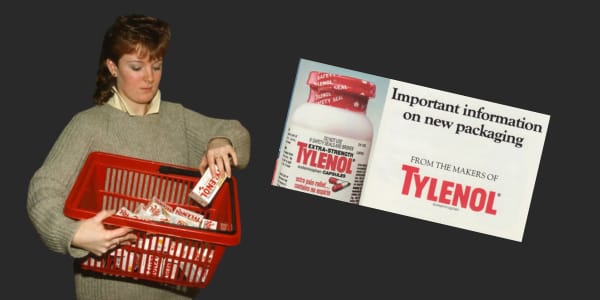
Heads up that I’m not a fan of big Pharma. I feel like I need to get that out early. And I’m also not a personal fan of Tylenol for any pain relief; for some reason, it never sits well with me. However, this story is an important reminder of resilience, so I still wanted to share it. Hope you get something out of it.
In September 1982, seven people in the Chicago area died after taking Extra-Strength Tylenol capsules that had been laced with cyanide. Scary stuff. It was a real threat, and there would have been significant fear for anyone with a bottle of Tylenol in their medicine cabinet.
Investigators concluded the poisoning happened after the product had reached store shelves, rather than during the factory production, but unfortunately the murders were never solved.
What’s also significant about this event was the response that came from Tylenol’s producer, Johnson & Johnson. Even though the tampering appeared to have happened outside its manufacturing process, the company moved to warn the public, halted advertising, and then made the huge decision to recall about 31 million bottles of Tylenol nationwide. The recall reportedly cost around $100 million at the time (well over $300m these days).
People still talk about this story because it’s a great demonstration of a company choosing to do the right thing, even at an enormous cost. Instead of trying to minimize the issue or hide behind technicalities, they acted as though protecting customers came first. That response is a big reason the case is still taught in business schools as an example of crisis leadership and doing the right thing under pressure. This is also the event that helped drive the shift to tamper-resistant packaging for over-the-counter medicine in the US, now regularly adopted in many other countries.
The long-term result was remarkable. Despite Tylenol taking a huge hit to their profitability and market share, the brand recovered, and went on to be even bigger than ever. It was partly in their response to pull all of the product, but also in all the other steps that helped ensure safer packaging that would protect customers.
Trust vs the easy out
Most of us like to believe we would do the right thing when it matters. But that’s easy to say when there’s no cost attached.
The real test comes when doing the right thing is inconvenient, or makes us look bad for a little while, or (perhaps relevant more than ever these days) admitting we made a mistake. Doing the hard thing when the test arrives can show real growth and determination to evolve.
It’s one of my favourite questions to ask in interviews. I like to ask people: when was the last time you changed your mind about something big or important? I’m looking for an example of coachability and vulnerability that demonstrates they can admit when they might be wrong. It’s a small moment where someone puts growth before ego.
That’s where character gets interesting.
It doesn’t even require big significant moments to show this growth. More often, it shows up in the ordinary stuff like meetings, leadership moments, parenting, dealing with the in-laws! Maybe it’s a decision to own the mistake before someone else finds it, or set a boundary, even when people might be annoyed.
And these little decisions aren’t easy. They’re hard because our brains aren’t naturally wired for noble sacrifice. They’re wired for survival and protection and we tend to prioritize relief with the discomfort gone. It’s human to try to avoid embarrassment, loss, conflict, or consequences. So we rationalize and suggest that maybe it’s not that bad, or maybe no one will notice.
All of this to say that choosing to do the right thing is really about identity. It’s a practice and a standard that we hold ourselves to. A way of deciding who we are before pressure arrives. Because trust and growth is built in real choices, actions, and moments where we could protect ourselves first, but we choose not to.
The tools to practice:
Look closely at the cost.
When we avoid the right thing, we usually focus only on the immediate pain of action. We need to flip it and ask ourselves what avoidance will cost in trust, energy, credibility, time, or self-respect. Sometimes the uncomfortable truth is actually the cheaper option.Decide what our ‘standard’ means.
We have to do this before the pressure hits. Write down a few lines we want to live by. Things like: I tell the truth quickly. I own mistakes early. I don’t protect comfort at the expense of integrity. Pre-deciding matters because the pressure will likely make us slip.Take the clean hit.
If a mistake has been made, take the honest loss now instead of the messy loss later. Clean pain is usually sharp but short. Avoided pain spreads. It leaks into relationships, performance, and peace of mind.Build identity through small reps.
We don’t need huge scandals or drama to practice this. It’s more real-life if we practice in the little moments. We admit the oversight, or have the honest conversation, or keep the promise. Small acts of integrity today will train us for the bigger ones tomorrow.Coachability is cool.
Being coachable is one life’s most underrated qualities. It’s energizing when we come across someone looking for feedback or ways to improve. Whether it’s a team member at work, or a friend who wants our advice, or a kid in our little league game. When we seek to improve ourselves, even if it hurts a little, it’s our way of saying we’re ready for growth.
The powerful part about the Tylenol story is that the company made a tough choice, even though it was found that they were not at fault. It was a huge corporate risk to take the $100m hit, but choosing to do the right thing saved lives and helped their business build long term success. It was a signal of company values and a declaration that we can always make things better.
Until next time friends, stay resilient.
Carré at Resilient Minds
What did you think of today's newsletter? |
Reply